Read the following passage about the Understanding Revenge Bedtime Procrastination and mark the letter A, B, C or D on your answer sheet to indicate the best answer to each of the following questions from 31 to 40.
Revenge bedtime procrastination is a habit where people stay awake late on purpose to have personal time, even though they know sleep is important. This term comes from a Chinese expression meaning "staying up late to fight back," and this rings true for many people today. [I] Many people do this because they feel stressed, work too much during the day, or just like doing things at night. When people cannot control themselves in the evening, they keep staying awake longer than they should.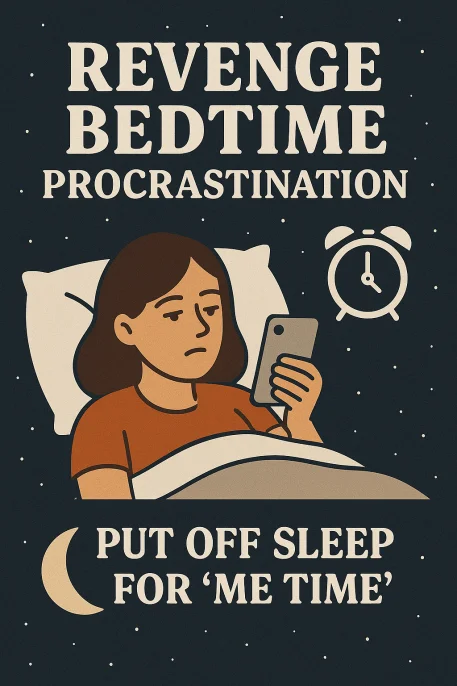
Many reasons explain why people do this. Some people have busy jobs that take most of their time and energy, so they feel very tired. By staying awake late, they want to enjoy time for themselves. They may scroll on their phones, read books, watch films, or do things they like. [II] Young people often do this too. They think staying late is a way to be free from work and the daily rules that control their lives.
However, not getting enough sleep causes real health problems. Adults should sleep seven to nine hours every night. [III] When people do not sleep enough, they cannot remember things well, cannot think clearly, feel sad or angry, and make bad choices. Sleeping too little makes people more likely to get heart disease, diabetes, gain weight, have weak bodies, feel sick often, have body pain, and feel sad or depressed. These health problems may not show right away, but they will come later and hurt people's lives very badly.
Fortunately, people can fix this problem. [IV] They should go to bed and wake up at the same time each day. They need a cool, dark room for sleeping. They should use phones less before bed and do calm things instead. They should drink less coffee and not smoke or drink alcohol before sleep. Short naps during the day can help too. If these things do not work, they should talk to a doctor for more help and advice.
https://www.webmd.com/mk
Question 31: The phrase “rings true” in paragraph 1 has the closest meaning to _________.
A. give up B. break down C. hold up D. fall asleep
Question 32: Where in the paragraph does the following sentence best fit?
Other people feel worried or have too many problems, so going to bed does not feel good.
A. [I]
B. [II]
C. [III]
D. [IV]
Question 33: Which of the following is NOT mentioned in the passage?
A. Adults should sleep seven to nine hours every night
B. Not sleeping enough can cause heart disease and diabetes
C. People should use phones less before bed and do calm things instead
D. Taking sleeping pills is an effective way to solve this problem
Question 34: The word “they” in paragraph 2 refers to _________.
A. some people
B. young people
C. busy jobs
D. all people in the world
Question 35: Which of the following best summarises paragraph 3?
A. Adults should sleep seven to nine hours every night to avoid feeling sad, angry, and making bad choices.
B. Insufficient sleep only causes cognitive problems such as poor memory and unclear thinking, which disappear after a good night's rest.
C. Insufficient sleep causes both mental and physical health problems that may not be visible immediately but will have serious long-term consequences for people's lives.
D. People who do not sleep enough are more likely to develop heart disease and diabetes, which are the most dangerous health problems associated with sleep deprivation.
Question 36: The word “depressed” in paragraph 3 is OPPOSITE in meaning to _________.
A. restless B. weary C. stressed D. optimistic
Question 37: Which of the following best paraphrases the underlined sentence in paragraph 4?
A. People should completely avoid using phones every evening and sleep immediately.
B. Reducing phone usage before sleep and choosing peaceful activities instead can improve rest.
C. Phones should be used more carefully at night, but doing other activities is unnecessary.
D. Before going to bed, people must replace all their evening routines with relaxation only.
Question 38: Which of the following is TRUE according to the passage?
A. Revenge bedtime procrastination only affects people who have stressful jobs and busy careers.
B. The passage recommends using mobile phones right before bed to help people relax better.
C. Young people often stay up late because they want to feel free from work and the daily rules that control their lives.
D. Health problems caused by insufficient sleep appear immediately and are noticeable right away.
Question 39: Which of the following can be inferred from the passage?
A. People who lack control over their daytime schedules may be more inclined to engage in revenge bedtime procrastination.
B. Medical intervention is always necessary to successfully overcome revenge bedtime procrastination.
C. Revenge bedtime procrastination only leads to psychological issues without causing any physical health consequences.
D. Consuming caffeine before bedtime is recommended for people struggling with revenge bedtime procrastination.
Question 40: Which of the following best summarises the passage?
A. The passage explains why young people prefer to stay awake late and emphasises the importance of having personal time during the evening.
B. The passage defines revenge bedtime procrastination, explains the various reasons people engage in this habit despite knowing its dangers, describes the serious health consequences of insufficient sleep, and provides practical solutions to improve sleep quality.
C. The passage describes how revenge bedtime procrastination is a Chinese habit that primarily affects busy workers and suggests that consulting a doctor is the most effective solution for this problem.
D. The passage discusses the negative health effects of staying up late at night, including heart disease and weight gain, and recommends that people should maintain a regular sleep schedule every day.