ĐỀ VIP 5 - TT - MỤC TIÊU 9+ TN THPT MÔN TIẾNG ANH 2026
(Đề thi có ... trang)
Môn thi: Tiếng Anh
Năm 2026
Thời gian làm bài: ... phút, không kể thời gian phát đề.
Họ, tên thí sinh:
Số báo danh:
Read the following advertisement and mark the letter A, B, C or D on your answer sheet to indicate the option that best fits each of the numbered blanks from 1 to 6.
Fighting Global Inequality: Join the Movement for Change
⮚Recent inequality statistics (1)_________ an alarming trend that threatens global stability worldwide. The richest 1% have accumulated extraordinary wealth over the past two decades, leading to widespread (2)_________ and exclusion across societies. (3)_________ of the world's population now faces unprecedented economic challenges, with the poorest 50% gaining merely 585 million compared to A. 3 million for the wealthiest.
⮚Economic experts (4)_________ have studied these patterns extensively warn of devastating social and political consequences. Government policies (5)_________ since the mid-1980s have systematically created this growing crisis. However, as the G20 report emphasizes, governments possess the power to (6)_________ these destructive trends through comprehensive reforms and decisive action.
⮚Don't miss this opportunity to be part of the solution. Join our international summit where world leaders, policymakers, and activists will address this global inequality emergency. Together, we can build a more equitable and sustainable future for all humanity.
https://www.ewn.co.za/lk
Question 1:A. revealingly B. reveal C. revelatory D. revelation
Read of the following leaflet and mark the letter A, B, C or D on your answer sheet to indicate the option that best fits each of the numbered blanks from 7 to 12.
⮚One in seven adolescents worldwide struggles with mental health disorders, making this a critical public health emergency. Depression, anxiety, and behavioral problems affect millions of young people, (7)_________ and large, due to various risk factors, including poverty, violence, and social exclusion.
⮚Harsh (8)_________ practices significantly impact teenagers' psychological development, while supportive family environments help build resilience and coping mechanisms. Comprehensive (9)_________ require multi-level approaches combining schools, healthcare systems, and community support.
⮚Some adolescents develop strong coping skills naturally, (10)_________ others need professional intervention and guidance to overcome their challenges. Building teenagers' capacity to (11)_________ emotions is essential for preventing long-term mental health issues and reducing suicide risks. (12)_________ crucial factor involves early detection and evidence-based treatment protocols that respect adolescents' rights and dignity.
⮚Join WHO's Helping Adolescents Thrive Initiative to create supportive environments where young people can flourish mentally, emotionally, and socially. Together, we can protect current well-being and future human potential.
Mark the letter A, B, C or D on your answer sheet to indicate the best arrangement of utterances or sentences to make a meaningful exchange or text in each of the following questions from 13 to 17.
Question 13:
A. Jake: My mom taught me one simple rule: low heat and patience. Want me to show you?
B. Maya: Yes, please! I'm tired of eating toast for every meal.
C. Maya: I burned my eggs again this morning. How do you cook so well?
Read the following passage about The Future of Jobs Report 2025 and mark the letter A, B, C or D on your answer sheet to indicate the option that best fits each of the numbered blanks from 18 to 22.
The Future of Jobs Report 2025, published by the World Economic Forum, reveals unprecedented transformations in global labor markets driven by technological advancement and socioeconomic disruption. According to a comprehensive analysis encompassing over 800 multinational corporations across 45 economies, the employment landscape will undergo radical restructuring within the next five years. By 2030, approximately 69 million jobs will be created globally; (18)_________, culminating in a net reduction of 14 million employment opportunities. This paradigmatic shift reflects accelerating digitalization trends and escalating geopolitical tensions affecting international commerce stability.
(19)_________; conversely, demand for AI specialists, data scientists, sustainability consultants, and educational professionals will surge dramatically. The report emphasizes that 44% of workers' core competencies will require transformation by 2027, with analytical thinking, creativity, and technological literacy becoming paramount. (20)_________, socioeconomic inequalities will inevitably widen. Meanwhile, emerging green economies necessitate specialized expertise in environmental management and renewable energy infrastructure development.
(21)_________, which challenges conventional fears about technological unemployment. Furthermore, the emergence of purpose-driven employment in renewable energy, digital healthcare, and eldercare sectors presents substantial opportunities; these industries will generate millions of meaningful career prospects. The study concludes that success in navigating this transition depends fundamentally on adaptive capacity, progressive policy frameworks, and corporate social responsibility, requiring sustained investment in comprehensive training initiatives. Ultimately, collaborative stakeholder engagement and proactive workforce development strategies will determine whether technological advancement, (22)_________, creates inclusive prosperity or exacerbates social fragmentation.
https://www.weforum.org/lk
Question 18:
A. Technology companies create innovations consumers purchase electronic devices
B. Environmental policies need funding therefore scientists conduct research
C. Students travel abroad frequently; teachers recommend educational programs
D. however, 83 million positions are expected to be displaced
Read the following passage about The 2025 Afghanistan Hunger Crisis: A Humanitarian Catastrophe and mark the letter A, B, C or D on your answer sheet to indicate the best answer to each of the following questions from 23 to 30.
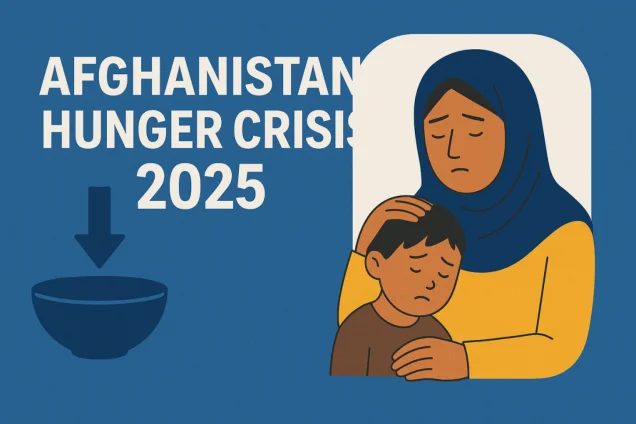
Afghanistan confronted an unprecedented humanitarian emergency in 2025, with acute food insecurity affecting approximately 15-17 million citizens—nearly one-third of the entire population. This devastating crisis emerged as one of the most severe global hunger emergencies, threatening millions with starvation and malnutrition. The magnitude of suffering reached alarming proportions, prompting urgent international concern and mobilization efforts worldwide. Regional experts described the situation as catastrophic, requiring immediate coordinated intervention.
The catastrophe stemmed from multiple interconnected factors that systematically dismantled Afghanistan's socioeconomic infrastructure. Following the Taliban's resumption of authority, international sanctions froze national assets while foreign assistance programs ceased abruptly. Simultaneously, persistent drought devastated agricultural productivity, destroying crops and livestock essential for rural subsistence. These combined pressures created a perfect storm of economic collapse and resource scarcity. Environmental degradation further exacerbated existing vulnerabilities, accelerating the deterioration of their living conditions.
Women and children bore disproportionate consequences of this humanitarian disaster. Restrictive policies prohibiting female employment severely reduced household incomes, while educational barriers limited future prospects for Afghan families. Healthcare systems reported an alarming escalation in childhood malnutrition cases, with over three million children requiring immediate medical intervention. Many households adopted desperate survival strategies, including skipping meals and selling valuable possessions. Gender-based restrictions compounded socioeconomic hardships, creating additional obstacles for vulnerable populations.
International relief organizations, including UNICEF, WHO, and the World Food Programme, launched comprehensive emergency responses despite significant operational challenges. However, insufficient funding and logistical constraints hampered their effectiveness considerably. By mid-2025, more than half of Afghan families depended entirely on humanitarian aid for survival. Experts emphasized that sustainable recovery necessitates political stabilization, inclusive governance, agricultural rehabilitation, and renewed international cooperation to address this ongoing tragedy effectively. Donor fatigue and competing global crises complicated fundraising efforts substantially.
https://en.wikipedia.org/lk
Question 23: All of the following contributed to the Afghanistan hunger crisis EXCEPT _________.
A. International sanctions and frozen national assets
B. Foreign military invasion and armed occupation
C. Persistent drought and reduced agricultural productivity
D. Taliban's resumption of authority and restrictive policies
Question 28: Which of the following is TRUE according to the passage?
A. International sanctions and persistent drought constituted the exclusive primary factors responsible for Afghanistan's unprecedented humanitarian emergency in 2025.
B. International relief organizations, including UNICEF, WHO, and the World Food Programme, launched comprehensive emergency response initiatives despite significant operational challenges.
C. Approximately twenty million Afghan citizens experienced acute food insecurity, representing nearly half of the country's total population during this crisis period.
D. Sustainable recovery necessitates exclusively political stabilization and renewed international cooperation, according to regional experts consulted in the comprehensive analysis.
Read the following passage about the Climate-Induced Displacement: A Growing Global Crisis and mark the letter A, B, C or D on your answer sheet to indicate the best answer to each of the following questions from 31 to 40.
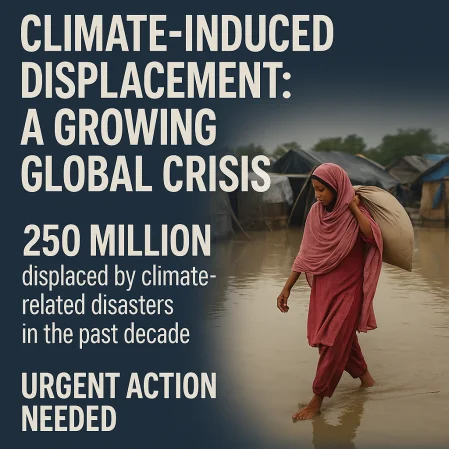
The contemporary climate catastrophe has emerged as an unprecedented humanitarian challenge, compelling millions to abandon their homelands permanently. According to UNHCR's comprehensive No Escape II report, climate-related disasters have displaced approximately 250 million individuals over the previous decade—equivalent to 70,000 daily displacements. [I] While vulnerable populations attempt to roll with the punches of intensifying environmental devastation, governments worldwide struggle to provide adequate assistance. This crisis exemplifies how climate change operates as a "risk multiplier," aggravating existing conflicts, food insecurity, and socioeconomic disparities across fragile regions globally.
[II] Brazil's 2024 floods in Rio Grande do Sul killed 181 people and displaced 580,000, including 43,000 vulnerable refugees. Myanmar's Cyclone Mocha obliterated Rakhine State in 2023, completely demolishing shelters housing 160,000 Rohingya refugees. Chad experienced catastrophic flooding in 2024, compelling 1.3 million of its inhabitants to evacuate—surpassing displacement figures from the preceding fifteen years combined. These calamities demonstrate disproportionate impacts on marginalized communities that contribute negligibly to global emissions yet endure the severest consequences.
Currently, three-quarters of all refugees inhabit areas experiencing elevated climate-risk exposure, while half of displaced populations reside in politically unstable states, including Sudan, Syria, Haiti, and Yemen. The number of nations confronting both conflict- and disaster-related displacement has tripled since 2009. However, fragile countries hosting refugees receive merely 25 percent of the requisiteclimate financing, abandoning millions in perpetual crisis. [III] This insufficient funding severely undermines resilience-building initiatives and emergency response capabilities throughout affected regions.
Without immediate intervention, experts predict refugee settlements could endure 200 days of extreme heat annually by 2050, rendering them uninhabitable. UN High Commissioner Filippo Grandi emphasized at COP30 that vulnerable communities require substantial climate finance rather than hollow commitments. The international community must prioritize comprehensive strategies addressing both immediate humanitarian necessities and long-term adaptation measures to mitigate future displacement emergencies effectively. [IV]
https://www.theguardian.com/lk
Question 31: The phrase “roll with the punches” in paragraph 1 has the closest meaning to _________.
Question 40: Which of the following best summarises the passage?
A. Climate disasters have displaced 250 million people globally, with recent catastrophes in Brazil, Myanmar, and Chad demonstrating escalating environmental threats to vulnerable populations.
B. The climate crisis has triggered unprecedented displacement requiring comprehensive international action, as current funding mechanisms fail to address mounting humanitarian needs adequately.
C. Recent flooding and cyclones across multiple continents have overwhelmed refugee settlements, exposing critical gaps in emergency response and resilience-building infrastructure systems.
D. Expert predictions indicate refugee settlements will face extreme heat conditions by 2050, necessitating immediate adaptation measures and enhanced climate financing commitments.